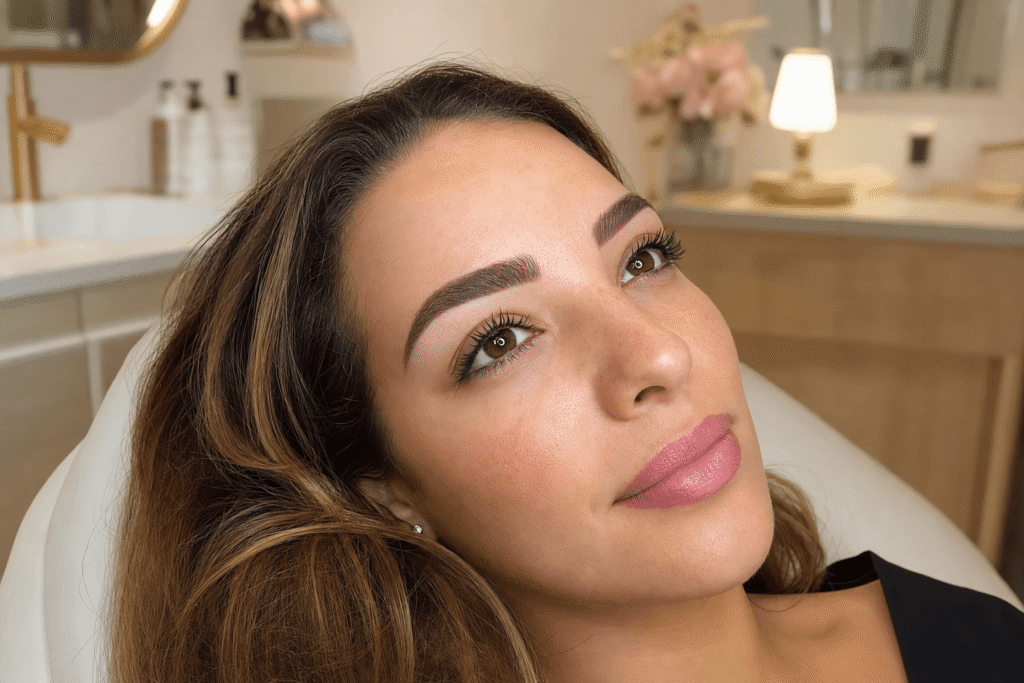
Understanding how eyebrows look after shading is essential before you book your appointment. Your shaded eyebrows will transform dramatically throughout the healing process, from the initial dark and bold appearance immediately after your session to the soft, powdery finish that emerges after six weeks. This comprehensive guide walks you through each healing stage, explains why your brows look darker at first, and shows you exactly what to expect from immediately after your procedure through complete healing.
You’ll learn how the eyebrow shading healing process varies by skin type, what visual changes happen each week, and when you’ll finally see your true healed color. Whether you’re considering powder brows or already scheduled your appointment, knowing what your shaded eyebrows appearance will be at each stage helps you prepare mentally and avoid panic during normal healing phases.
Quick Answer
Eyebrows look very dark and bold immediately after shading, then scab and lighten over two weeks. They appear too light during weeks 3-4 (ghosting phase), then your true soft, powdery color emerges by week 6.
What Eyebrow Shading Is and How It Creates Your Look
Eyebrow shading, also called powder brows or ombre shading, is a semi-permanent makeup technique that deposits pigment ink into the upper layers of your skin using a handheld tattoo tool. Unlike microblading which creates individual hair-like strokes, shading uses a pixelated technique that builds thousands of tiny dots to create a soft, filled-in appearance similar to powdered makeup.
The technique works by implanting pigment at a controlled depth of approximately 1.0-1.5mm into the dermal-epidermal junction. This shallow placement allows the color to remain visible while your skin naturally heals around it.
At Fantasy Beauty in Mont-Royal, Leila Ghadyani uses personalized PHI brow mapping before every shading session to ensure the shape complements your facial structure. This mathematical approach to brow design means your shaded results will look balanced and natural, not cookie-cutter or artificial.
Key Takeaways
- Expect eyebrows to look 40-50% darker immediately after shading procedure
- Anticipate normal scabbing and flaking during the first two weeks of healing
- Wait through the ghosting phase when brows seem too light around week three
- Plan for your true healed color to emerge between weeks five and six
- Book your touch-up appointment 6-8 weeks after initial shading session
- Understand that oily skin typically retains a softer finish than dry skin
How Eyebrows Look Immediately After Shading
Immediately after your eyebrow shading session, your brows will look dramatically darker and more intense than your final healed result. This bold appearance catches many first-time clients off guard, but it’s completely normal and expected.
The fresh pigment sits on the surface of your skin, appearing 40-50% darker than your healed color will be. Your eyebrows will look almost like you applied a thick layer of brow powder or pomade. The color intensity is strongest right after the procedure because the pigment hasn’t yet settled into your skin or begun the oxidation process.
You’ll also notice slight redness and swelling around the brow area. Your skin has just been traumatized by thousands of tiny needle punctures, so some inflammation is part of the natural response. This swelling typically subsides within 24-48 hours.
The shape will appear very defined and precise, with crisp edges that follow the brow mapping done before your procedure. Some clients describe the immediate look as too perfect or too dark, but resist the urge to judge your final results at this stage.
During consultations at our Mont-Royal studio, Leila Ghadyani always shows clients before-and-after photos spanning the full healing timeline. This visual preparation prevents the common panic that happens when you see your dark brows in the mirror that first evening. Request to see these comparison photos during your consultation appointment so you understand what to expect at each stage.
Complete Week-by-Week Healing Timeline: What Your Shaded Eyebrows Will Look Like
The eyebrow shading healing process follows a predictable pattern, though exact timing varies by individual. Understanding each phase helps you recognize normal healing versus potential problems.
Week 1-2: The Dark and Bold Phase with Scabbing
During days 1-3, your eyebrows remain very dark and bold. The color may appear almost black or significantly darker than the shade you selected with your artist. This is when most clients feel self-conscious about their new brows.
Around day 3-4, you’ll notice scabbing beginning to form. These aren’t thick, raised scabs like you’d get from a cut. Instead, they appear as a thin, flaky layer across your brows, similar to dry skin peeling after a sunburn.
Between days 5-10, the scabbing intensifies and begins to flake off. You’ll notice small pieces of pigmented skin coming away, revealing lighter skin underneath. Your brows will look uneven during this phase, with some areas still dark while others have flaked to reveal the color beneath.
By the end of week 2, most of the visible scabbing has fallen off. Your eyebrows now look significantly lighter than they did immediately after the procedure, sometimes 30-40% lighter.
Week 3-4: The Ghosting Phase When Brows Look Too Light
This is the most anxiety-inducing phase for clients who don’t understand the healing timeline. Your eyebrows will suddenly look much too light, almost as if the pigment has disappeared entirely. Some areas may even appear patchy or uneven.
This ghosting happens because the outermost layer of pigment has flaked away with the scabs, but the deeper pigment hasn’t yet risen to the surface. A new layer of skin has formed over the implanted pigment, temporarily masking the true color.
At Fantasy Beauty, we frequently reassure clients during this phase that their brows haven’t failed. The pigment is still there, settled into the dermal layer where it belongs. It simply takes time for your skin to become transparent enough to reveal the true healed color.
Week 5-6: Your True Healed Color Emerges
Between weeks 5 and 6, the magic finally happens. Your true healed color begins to emerge as the superficial skin layer becomes more transparent. The pigment that settled into your dermal-epidermal junction now becomes fully visible.
Your eyebrows will look softer and more powdery than they did immediately after the procedure, but fuller and more defined than they appeared during the ghosting phase. The color is typically 20-30% lighter than your fresh procedure look.
The texture appears smooth and even, with a soft gradient that looks like expertly applied brow powder. The crisp edges have softened slightly as your skin completed its healing, creating a more natural integration between your brows and surrounding skin.
At this 6-week mark, you’re ready for your touch-up appointment. This second session allows your artist to assess color retention, fill in any lighter patches, and adjust the shape or intensity if needed.
| Healing Phase | Timeline | Appearance Description |
|---|---|---|
| Fresh procedure | Day 0 | Very dark, bold, defined edges, 40-50% darker than healed result |
| Initial healing | Days 1-3 | Remains dark, slight redness and swelling, may feel tight |
| Scabbing phase | Days 4-10 | Flaky texture, uneven appearance as scabs form and shed |
| Post-scab lightening | Days 11-14 | Significantly lighter, 30-40% reduction in darkness |
| Ghosting phase | Weeks 3-4 | Very light or patchy, pigment appears hidden beneath new skin |
| True color emergence | Weeks 5-6 | Soft, powdery, natural-looking final result appears |
Realistic Expectations: Comparing Fresh vs Healed Shading Results
Understanding the dramatic difference between fresh shading and healed results prevents disappointment and panic during healing. Immediately after your procedure, your brows will look 40-50% darker, with crisp, defined edges that appear almost too perfect. The color sits on the skin surface, creating maximum intensity.
After complete healing at week 6, your brows will look softer and more natural, with 20-30% lighter color than the fresh application. The edges blend seamlessly into your skin, and the overall effect resembles expertly applied powder makeup rather than a bold statement.
When comparing photos from day 0 to week 6, clients notice several key differences: the shape appears softer and less geometric, the color intensity decreases significantly, the overall effect looks more blended and natural, and any initial redness or swelling has completely resolved. Fresh shading looks like a strong makeup application, while healed shading looks like your natural brows with enhanced fullness and definition.
During your consultation at Fantasy Beauty, Leila Ghadyani shows side-by-side comparison photos of actual clients at day 0 versus week 6, demonstrating how the same set of brows transforms through healing stages with visual examples of light, medium, and dark skin tones.
Why Your Eyebrows Look Darker After Shading and When They Fade
The dramatic darkness immediately after eyebrow shading results from three main factors. First, fresh pigment sits on the surface of your skin rather than settled into the dermal layer. This superficial placement creates maximum color intensity.
Second, your skin swells slightly from the trauma of the procedure. This swelling pushes the pigment closer to the surface and creates a denser appearance. As inflammation subsides over 24-48 hours, some of this intensity diminishes.
Third, excess pigment and lymphatic fluid create a temporary coating on your brows. When your artist wipes your brows during the procedure, some pigment remains in this fluid layer, contributing to the dark appearance.
The fading process begins almost immediately. As your skin heals, it naturally sheds the outermost layer containing surface pigment. This is why you see such dramatic lightening during the scabbing phase.
The pigment that remains in the dermal layer undergoes oxidation, a chemical process where the color molecules interact with oxygen in your skin. This typically shifts the shade slightly, which is why artists choose pigments that account for this color change.
Your brows will continue subtle fading over the 12-18 months following your procedure. This gradual lightening is why eyebrow shading is considered semi-permanent makeup rather than permanent. Most clients book annual touch-up appointments to maintain their desired intensity.
How Shaded Eyebrow Results Vary by Skin Type and Tone
Your skin type plays a crucial role in how your shaded eyebrows look both immediately after the procedure and once fully healed. Understanding these variations helps set realistic expectations.
How Oily vs Dry Skin Affects Shading Appearance
Oily skin produces excess sebum that can push pigment around as it heals, resulting in softer, more diffused edges. Clients with oily skin typically experience a powdery, gradient effect that looks very natural but may require more frequent touch-ups.
The pigment doesn’t retain as sharply in oily skin because the constant oil production creates movement in the dermal layer. This means your shading may fade 20-30% faster than it would in normal or dry skin.
Dry skin, by contrast, holds pigment more crisply and retains color longer. Your healed results will show more defined edges and potentially darker overall appearance. The scabbing phase may be shorter and less dramatic.
At Fantasy Beauty’s women-only studio, Leila Ghadyani adjusts the implantation technique based on your skin assessment during the consultation. Oily skin may receive slightly deeper pigment placement, while dry skin benefits from a lighter touch to prevent overly harsh results.
Color Retention Differences Across Skin Tones
Lighter skin tones show pigment color more vibrantly and tend to retain cooler undertones in the healed result. If your artist uses a pigment that’s too warm, it may appear orange or reddish in fair skin.
Medium skin tones typically show the most predictable color retention, healing very close to the pigment shade selected during your consultation. These skin tones usually require less color correction during touch-up appointments.
Darker skin tones may experience more color shift during oxidation. Pigments can appear ashier or grayer as they heal, which is why artists specifically formulated for deeper skin must be used. Never let an artist use the same pigment shade on dark skin that they would use on fair skin.
Skin with warm undertones tends to shift pigments slightly warmer during healing. Your artist should account for this by choosing cooler-toned pigments initially. Skin with cool undertones may make pigments appear slightly ashier, so warmer pigment bases help prevent gray or bluish healed results.
Understanding how your specific combination of skin type and tone affects retention allows your artist to customize the procedure. At Fantasy Beauty, Leila evaluates these factors during consultation and selects pigments formulated to work with your unique characteristics rather than against them.
Ready to book your treatment?
Visit Leila Ghadyani at our Mont-Royal studio for a personalized consultation and expert permanent makeup treatment.
Eyebrow Shading vs Microblading: How the Healed Results Differ
The healed appearance of shading versus microblading services differs significantly, which is why understanding both techniques helps you choose the right option.
Microblading creates individual hair-like strokes using a manual blade, resulting in a more textured, natural appearance that mimics real brow hairs. When healed, microbladed brows show distinct lines that look like additional hairs growing from your brow.
Shading, by contrast, creates a soft, powdery effect without visible individual strokes. The healed result looks like you filled in your brows with powder or pencil, giving you that makeup look 24/7.
Microblading typically shows more dramatic color loss during healing, with strokes fading 40-50% from their initial darkness. Shading experiences more predictable retention, usually fading 30-40%.
The texture differs significantly too. Healed microblading appears slightly raised if you run your finger across it, as the pigment sits in individual cuts. Shading feels completely smooth because the pigment is deposited in dots rather than linear incisions.
Shading lasts longer than microblading in most clients, typically 18-24 months versus 12-18 months for hair strokes. The pixelated shading technique deposits pigment more evenly, creating better retention.
For clients seeking the most natural look, nano brows technique offers a third option that combines the crisp strokes of microblading with the gentle implantation method of shading. This creates ultra-realistic hair simulation without the trauma of blade cuts.
Essential Aftercare to Protect Your Shading Results
Proper aftercare directly impacts how your shaded eyebrows look throughout healing and determines your final results. Following these guidelines protects your investment and ensures optimal color retention.
For the first 24 hours, keep your brows completely dry. No water, no sweat, no products. This initial period allows the pigment to begin bonding with your skin without interference.
Days 2-10 require gentle cleansing twice daily with a pH-balanced cleanser. Pat your brows dry with a clean tissue, never rubbing. Apply a thin layer of the aftercare ointment your artist provides, using a clean cotton swab.
Never pick, scratch, or peel the scabs. This is the most important rule. When you remove scabs prematurely, you pull out pigment along with the healing tissue, creating permanent patches in your healed results.
Avoid these activities during the first 14 days: swimming, saunas, steam rooms, heavy sweating from exercise, sleeping face-down, and applying makeup directly on your brows. Each of these can interfere with proper healing.
Sun exposure should be minimal during healing, as UV rays can cause premature fading and alter pigment color. Once healed, always apply SPF above your brows to prolong your results.
Avoid skincare products containing retinoids, glycolic acid, salicylic acid, or other exfoliants near your brows. These ingredients accelerate cell turnover and push out pigment faster.
During the ghosting phase when your brows look too light, resist the urge to book an early touch-up. Your skin needs the full 6-8 weeks to heal completely before additional pigment can be safely implanted.
For detailed aftercare instructions specific to your skin type, review our comprehensive guide to eyebrow shading technique which includes customized healing protocols.
What to Do If Your Shaded Eyebrows Don’t Look as Expected
Not all healing follows the textbook timeline, and knowing when to be concerned versus when to wait helps you make smart decisions about your results.
Normal Healing Variations That Don’t Require Concern
If your eyebrows look patchy or uneven after the ghosting phase ends at week 5-6, this typically indicates areas where pigment didn’t retain as well. This is completely normal and exactly why the touch-up appointment exists. Your artist will assess these areas and add pigment where needed.
If one brow healed significantly darker or lighter than the other, document this with photos and bring it to your touch-up appointment. Uneven retention happens occasionally and is easily corrected during the refinement session.
If your brows look too dark even after complete healing, wait the full 6-8 weeks before judging. Pigment continues subtle changes during this period. If they’re still darker than desired after 8 weeks, your touch-up can focus on shape refinement rather than adding more pigment.
If your brows seem to have disappeared during the ghosting phase at weeks 3-4, do not panic. This is the single most common concern clients express, and it resolves naturally as your skin continues healing. The pigment is still there beneath the new skin layer.
When to Contact Your Artist During Healing
If your healed color looks too warm with orange, red, or pink tones, this indicates pigment oxidation that didn’t account for your skin’s undertones. Your artist can apply cooler-toned pigment during the touch-up to neutralize the warmth.
If you experience prolonged redness, swelling, excessive scabbing, pus, or signs of infection, contact your artist immediately. While rare, allergic reactions or infections require prompt professional attention.
If your shading disappeared almost entirely during healing, you may be a pigment rejector whose immune system aggressively pushes out foreign substances. This happens in approximately 2-3% of clients. Your artist can try different pigment brands or adjust the technique during your touch-up.
Never seek correction from a different artist until you’ve given your original artist the opportunity to perform your included touch-up. Every artist works with different pigments and techniques, and introducing a second artist’s work over the first creates unpredictable results.
Leila Ghadyani photographs clients at each healing stage to track their unique healing pattern. This becomes invaluable for the touch-up session, allowing precise adjustments based on how your specific skin responds to pigment retention. These comparison photos also help you see your progress objectively when you’re worried about how your brows look.
Frequently Asked Questions
How do eyebrows look immediately after shading?
Eyebrows look very dark, bold, and 40-50% more intense than your final healed result immediately after shading. The fresh pigment appears almost black with crisp, defined edges and possibly slight redness or swelling around the brow area. This dramatic darkness is completely normal and fades significantly within two weeks.
Why do my eyebrows look so dark after shading and when will they fade?
Your eyebrows look dark after shading because fresh pigment sits on the skin surface, swelling pushes pigment closer to the surface, and excess lymphatic fluid creates a temporary coating. The dramatic darkness begins fading within days as your skin sheds its outermost layer during scabbing. By week 2, brows lighten 30-40%, and by week 6, they settle into their true healed color.
What are the healing stages after eyebrow shading and how do they look?
The healing stages include days 1-3 when brows remain very dark and bold, days 4-10 when scabbing and flaking occur with uneven appearance, days 11-14 when brows look 30-40% lighter after scabs shed, weeks 3-4 (ghosting phase) when brows appear too light or patchy, and weeks 5-6 when your true soft, powdery color finally emerges.
What is the difference between how eyebrow shading and microblading look when healed?
Healed eyebrow shading creates a soft, powdery effect that looks like filled-in makeup without visible individual strokes, while healed microblading shows distinct hair-like lines that mimic natural brow hairs. Shading appears smooth to the touch and lasts 18-24 months, while microblading creates texture with raised strokes and lasts 12-18 months.
When will I see my final eyebrow shading results?
You’ll see your final eyebrow shading results between weeks 5 and 6 after your initial procedure. This is when your true healed color emerges as the superficial skin layer becomes transparent enough to reveal the pigment settled in your dermal layer. You’ll need a touch-up appointment at 6-8 weeks to refine the results and achieve optimal appearance.
Book Your Eyebrow Shading Consultation in Montreal
Understanding how eyebrows look after shading at each healing stage prepares you mentally for the transformation and prevents unnecessary worry during normal healing phases. Your shaded eyebrows will progress from dramatically dark immediately after the procedure through scabbing, ghosting, and finally into the soft, powdery results you envisioned.
With over 10 years of permanent makeup experience, Leila Ghadyani at Fantasy Beauty provides detailed healing guidance and realistic expectations during every consultation. Our Mont-Royal studio’s personalized approach ensures you understand exactly what your specific skin type and tone will show throughout healing.
Ready to achieve perfectly powdered brows that look beautiful every day? Book your consultation at our women-only studio in Mont-Royal, Montreal, or call (514) 885-8456 to discuss your eyebrow shading goals with Leila Ghadyani today.